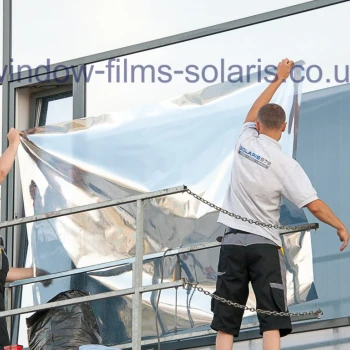
One way window films
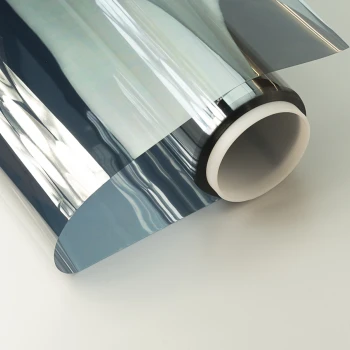
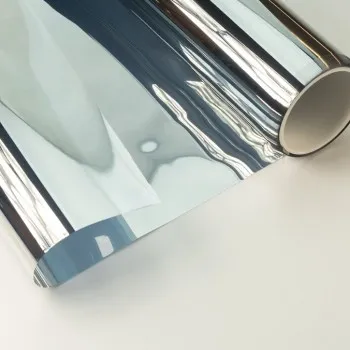
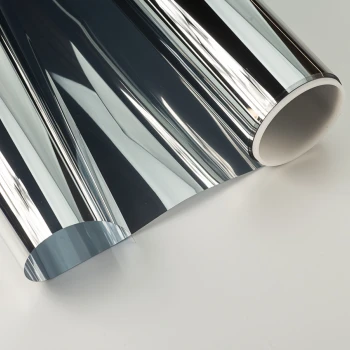
One way window film comes in several shades: the standard 20%, a dark 10% and a light 35%, for external and internal installation. One-way window film can be selected and ordered online with delivery throughout the UK: 7 models in silver and bronze are available.

One way glass film belongs to the family of mirrored glass coverings. It gives ordinary glass the properties of one-way privacy glass. One-way glass and one-way window film are the only products that let you see what is happening outside while you stay protected from view by day. Each film has a self-adhesive layer, which simplifies application on glass. During the daytime, occupants can observe the outside clearly, while the view from outside is blocked.
Where one way window films are used
One-way window films are used in commercial property and in the private sector, in flats and houses. One way window film provides privacy in special situations, such as in police premises, as well as in private houses overlooked by neighbours. One way window films are used on:
- Windows and glass doors of private houses, especially on the ground floor
- Ground-floor flats facing the street or a shared courtyard
- Windows in high-rise flats and upper floors in densely built-up areas
- Homes where you want to block the view in and keep the view out
- Interior glass, office partitions and glazed room dividers
- Glass panels and balcony balustrades
- Glazing in security and police premises
- Any other glass that needs daytime privacy: one way film for windows does the job
Benefits of our online shop
A professional range of one way window film and a professional online sales service:
- Silver and bronze one way window film
- Free custom-size cutting of one way film for windows based on your specifications
- A 3M Gold squeegee and mounting concentrate in each package
- A free additional fragment of film to practise on, and an extended installation tool kit with larger orders
- Delivery of one way film for windows UK-wide by FedEx

How one-way window films work
1 way window film is a metallised mirror film that reflects a large part of the light hitting it. The side of one-way glass film with more light reflects and looks almost opaque, while from the darker side you keep a clear view. For the one-way effect to work, the light level on one side of the glass needs to be about three times higher than on the other.
A cloudy UK day is usually enough: with the main lights off in the room, it is still around three times brighter outside, so one way window film keeps its mirror effect. In the evening the effect reverses, so the film gives privacy by day.
If the one-sided effect of one way window film is not what you need, explore the privacy window tints section.
Example 1: one-way visibility in a living room
During the day: take a living room window facing the street, with window film one way applied. Outside it is about three times brighter than in the room, so nobody on the street can see what is happening inside. For people outside, your living room window is like a mirror, while from inside it stays transparent. You see your neighbour walking past; your neighbour sees only his own reflection and nothing of your home.
In the evening and at night, when it is dark outside and the living room lights are on, the situation reverses: now the room is the bright side. The neighbour can see into the room, and you see nothing of the street: the window becomes a mirror for you. Every one way window film behaves like this, whatever the brand.
Example 2: one-way film in a police station
The classic example, shown in films and seen in real life, is the interrogation room in a police station. The interrogation room is brightly lit, and the observation room next to it is dark. Officers in the dark room see everything through the glass; the person in the bright room sees only a mirror. A window with one way window film works the same way: by day the street is the bright room and your home is the dark one.

Advantages of one-way visibility window tints
The main advantage of one-way window film: existing glass gets the properties you want without dismantling or replacing it. The film is easy to apply, and the glass changes its properties at once. Other advantages of one way window films:
- Daytime one-way visibility: one way vision window films suit windows in densely populated urban areas.
- Heat reflection: one-way glass film reflects from 67% to 91% of solar energy (TSER), depending on the model.
- Sunlight reduction: minimises intense sunlight and reduces glare.
- UV defence: one-way window film blocks 99% of UV.
- Simple set-up: fitted with mounting solution and a squeegee.
- Long-lasting: 9 years and more for interior films, 4 years and more for exterior films.
- Minimal upkeep: one way window tint needs little maintenance.

Limitations of one-way glass films
- One-way glass films darken the glass to which they are applied: any one way window film reduces the light coming in.
- The direction of the mirror effect depends on the light: how one way glass film works depends on where the light comes from. When it is brighter outside than inside, the glass looks like a mirror from the street. When the room is brightly lit and it is dark outside, the mirror effect reverses.
Heads up! During the evenings and nighttime, one-way mirror window film reverses its effect and gives no privacy from people looking in. This limitation is usually compensated for with curtains or blinds. This is the working principle of all window mirror films, with no alternative solutions currently available.
Curtains and blinds as a necessary complement to one way window films
At night the mirror effect changes direction, so curtains or blinds are used together with one way window film at night. During the day the film reflects outwards and stays transparent from inside: curtains stay open, the film protects you from view, and you see everything outside. In the evening, when the effect flips, the curtains are drawn. And if you want to look out at night, open the curtains and switch off the lights inside: with the lights off, you can see through the film again.
If you are not happy that one way view window film depends on day and night, consider frosted glass films or other privacy window films.
Bronze and silver one-way mirror window film
Our online shop offers bronze and silver one-way mirror window film, with VLT (visible light transmission) from 7% to 34%. The palette is limited by the metals used in production. The standard shade is 20% VLT. The darker the one way mirror film, the stronger the one-way effect; a lighter, semi-mirror film gives a weaker mirror and less privacy.
You need to understand that the deeper the tint of a one way mirror film for windows, the less light comes into the room. VLT shows it as a percentage: a higher VLT means a clearer film. A 20% film such as Omg 20 lets in about a fifth of the daylight and keeps the room more shaded.
Optimal film selection
Window films one way vary in colour and degree of tinting. The crucial metric is the visible light transmission (VLT%): it should be clearly stated in the technical data. Ignoring it raises the risk of buying a one way window film that is too dark or too translucent.
Most customers choose a standard 20% VLT tint; less frequently a lighter 35% VLT or a deeply tinted 10% VLT. Whichever shade of one way window film you choose, we cut it to your sizes and send it by FedEx anywhere in the UK.

Select and purchase your one way window film today
We stock 7 models of one way mirror films: 3 for interior and 4 for exterior installation, in silver and bronze. The price for your sizes appears on each product page, and payment options are in the buy one way mirror film section.
Internal application films: silver one-way mirror films
- Omg 20: standard silver, interior, VLT 22%, TSER 84%. A silver one-sided glass film and the usual choice; recommended for double and triple glazing, where it has been used for over 15 years without problems. Also sold by the linear metre, in widths of 50, 76 and 101 cm.
- Omg 35: semi-mirror silver, interior, VLT 34%, TSER 67%. A light film with a weaker mirror and less privacy; take it for small windows.
- Omg 10: ultra mirror silver, interior, VLT 7%, TSER 91%. A very dark film with the strongest mirror; also recommended for double and triple glazing.
External application films: silver and bronze
- Omg 20 EX: standard silver, exterior, VLT 24%, TSER 83%. A mirror-finish external one-way film for domestic windows.
- Omg 30 EX: semi-mirror silver, exterior, VLT 32%, TSER 71%. Light external tinting with a weaker mirror.
- Bronze AT 20 EX: standard bronze, exterior, VLT 19%, TSER 83%. An externally applied one way mirrored window film with a bronze finish.
- Bronze AT 35 EX: semi-mirror bronze, exterior, VLT 34%, TSER 75%. Bronze-toned mirror one way window film with semi-reflectivity.
Want the strongest mirror and do not mind a darker room: take Omg 10. Want more daylight: take a semi-mirror one way film, Omg 35 or Omg 30 EX; keep in mind that its mirror effect, and so its privacy, is weaker too.
One way window film price
The price of one way window film starts from £4.00 for the smallest piece. The exact full cost is easy to find: on the product page, for example Omg 20, enter your sizes in centimetres, and the site recalculates the price of each piece in pounds automatically. Then add the pieces to the basket and go to checkout: there you see everything at once, the cost of the film, delivery and the free bonuses with your order. You can find out the full price of one way window film without registering.
Guide to one-way mirror tints
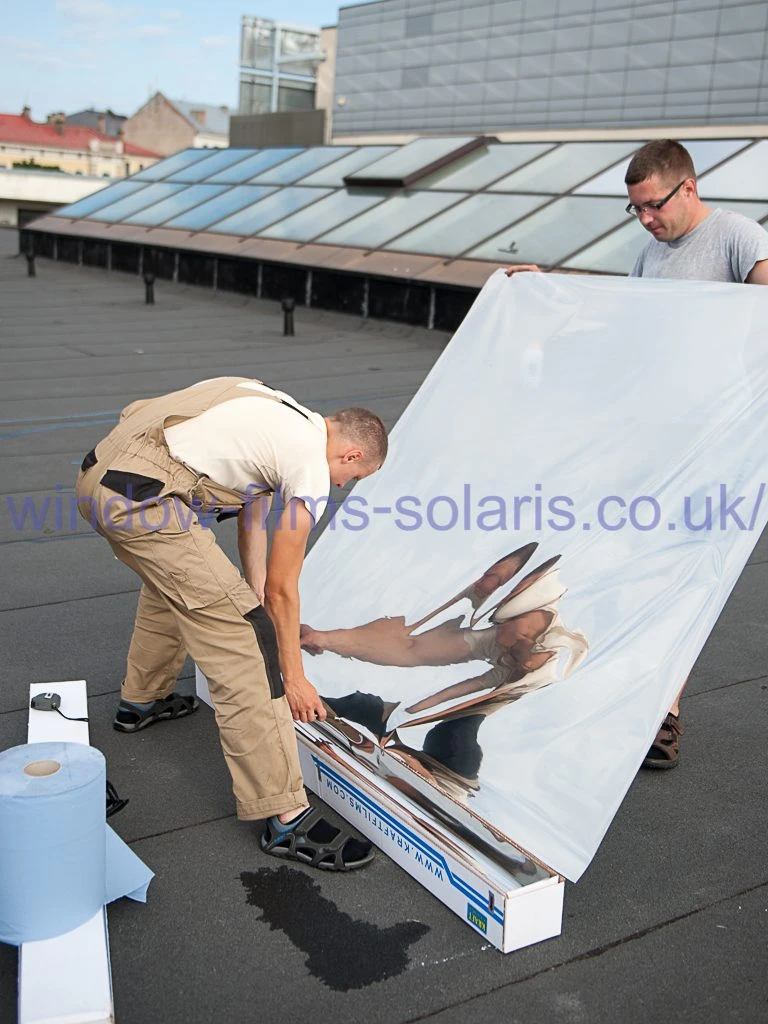
Every one-way mirror film in our range is self-adhesive: you remove the clear liner and apply the adhesive side to wet glass, and later the film can be removed when you want a change.
The side of the glass does not change the effect of one-way mirror film: whether you fit the film inside or outside, the brighter side always looks like a mirror. So the side is chosen by convenience of fitting and by service life, as described in the questions below.
Every maker of one-way mirror window film has its own standards. Some films look hazy; ours is clear and mirrored, like clean, freshly washed glass, and the photos on our product pages are real.
Fit one way window film fully, across the whole glass: with full adhesion and good-quality film, there are no rainbow edges or peeling. A step-by-step guide is in our blog: how to install self-adhesive window film.
Similar mirror films for other tasks
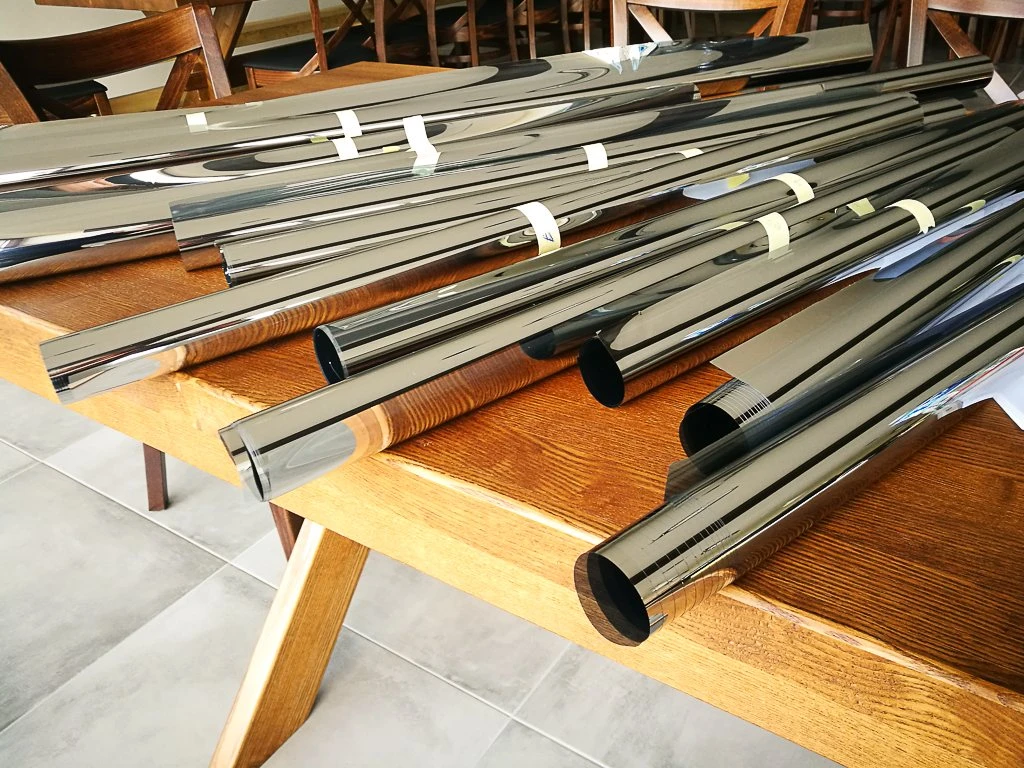
If you need the same effect as one way window film on indoor glass or for a DIY mirror, two-way mirror film works on the same principle. When privacy at home or in the office is the main task, the one way privacy window film section shows the same films chosen for it. All mirrored films with a comparison table are in the mirror window films section, and all our films by type are in the window tint film section.
Frequently asked questions about one way window films
What is window one way film and how does it differ from ordinary solar film?
Window one way film is a heavily metallised film that turns glass into a one-way mirror during the day: from outside people see a reflection, from inside you keep a clear view. Solar films can be very light; some models contain metal molecules too, but they may not create a clear mirror effect for privacy, and people can see through them. One way window films give privacy by day and reflect solar heat well.
What are the pros and cons of one-way window film?
Pros of one-way window film:
- privacy by day with a clear view out
- solar heat reflection
- less glare
- 99% UV protection
- no dismantling of the glass
Cons of one-way window film:
- the room gets darker
- at night the effect reverses, so you need curtains or blinds
How does 1 way window film work and which side acts as the mirror?
In 1 way window film, the side with more light reflects; that is physics, and either side of the film can be the mirror. The technology needs roughly a 3-fold difference in light levels. That is why the mirror faces outwards during the day, and at night, with lights on inside, the effect flips inwards: then curtains or blinds are necessary.
Does 1 way glass film work on a cloudy day, without sun?
Yes. 1 way glass film works on a cloudy day too, because it depends on the difference in light. On an overcast day it is still roughly three times brighter outside than in a room without the main lights on. If you switch on very bright light inside, the levels even out and the effect weakens, so the main criterion is the difference: think about the lighting inside as well as outside.
What colours does one-way mirror film come in, and what shade will I get?
The palette of one-way mirror film is limited by the metals used in production: silver and bronze. The final shade depends on both the film's tint and the factory tint of your glass (every pane has a 10–15% tint). The most popular choice is silver Omg 20.
Will window film one way darken my room? The window is small
Yes, window film one way darkens the room. If you want one-way privacy, accept a little less light inside. Omg 20 is used on large windows. The semi-mirror Omg 35 darkens less, but its mirror effect, and so its privacy, is weaker too.
Can I apply one way vision window film to double or triple glazing?
Yes. From the outside, a wide range of one way vision window film models can go on glazing units. From the inside, we recommend Omg 20 or Omg 10: these window films are suited for interior installation on double and triple glazing.
Should the film go inside or outside?
For the one-way effect it makes no difference where one way film for glass windows goes. Inside or outside is usually decided by two things: first, which side is easier to apply; second, service life outside is about half as long, 4 years and more versus 9 years and more inside.
I applied the film with the "wrong" side facing out. Do I need to redo it?
No. Only the adhesive side of one-way window film matters: it goes against the glass after you remove the transparent liner. The side that reflects is always the one with more light, regardless of how you applied the film.
Do the edges of one way mirror film need sealing?
No, in most cases. Some recommend sealing the edges of one way mirror film for exterior installation, but film from our range, fully adhered, needs no extra sealing. The exception is glass where water stands at the edges all the time, such as a flat horizontal roof or a swimming pool. If the film is installed properly, sealing is a waste of time and money.
Do birds fly into one way window film?
Yes, birds can fly into one way window film. The clearer the reflection, the greater the chance: a bird sees it as a tunnel, a continuation of open space to fly into, especially when the sun is reflected in the glass.
How do I apply one-way glass film without bubbles and streaks?
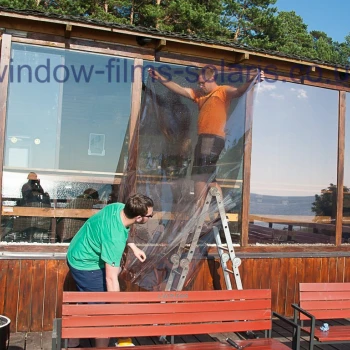
Only with mounting solution and a proper squeegee. Large pieces of one-way glass film require two people for installation: a 250 cm piece cannot be installed by one person alone, and two pairs of hands and four eyes will save the film from damage.